
A sales kickoff (SKO) is the meeting where leadership brings the sales team together to share the year’s priorities and new messaging. Done well, it does more than create excitement and alignment. It launches a focused plan that changes how sellers and managers work.
How confident are you that your sales kickoff will turn into more pipeline within 90 days? If your kickoff is in January or February, the decisions that determine its impact are being made right now. The theme, agenda, and speakers matter. But the bigger question is this: what will your sellers and managers actually do differently once they get back home?
Why do sales kickoffs fail to produce pipeline?
Here’s the pattern we often see. Leadership shares the new priorities, introduces messaging, and maybe launches a playbook or two. Everyone leaves excited and motivated. Then a few reps try the new message, it feels awkward, and they don’t get the response they want right out of the gate. They revert to what they know. Managers go back to their one-on-ones and forecast calls and ask the same questions.
By quarter-end, everyone is chasing the number and the deal, and the conversation comes back to one thing: how much, and when will it close? Your strategy may have been great. Your kickoff may have been really good. But the team never built the skills and habits to execute it.
Presentations alone won’t change how your team sells. Sellers need to know how the priorities apply to their accounts and customers. Managers need to know how to coach to the new strategy and what good looks like. You can buy more training or introduce new tools. They can help, but your team needs a clear plan for how to execute.
What should a sales kickoff focus on? Revenue plays
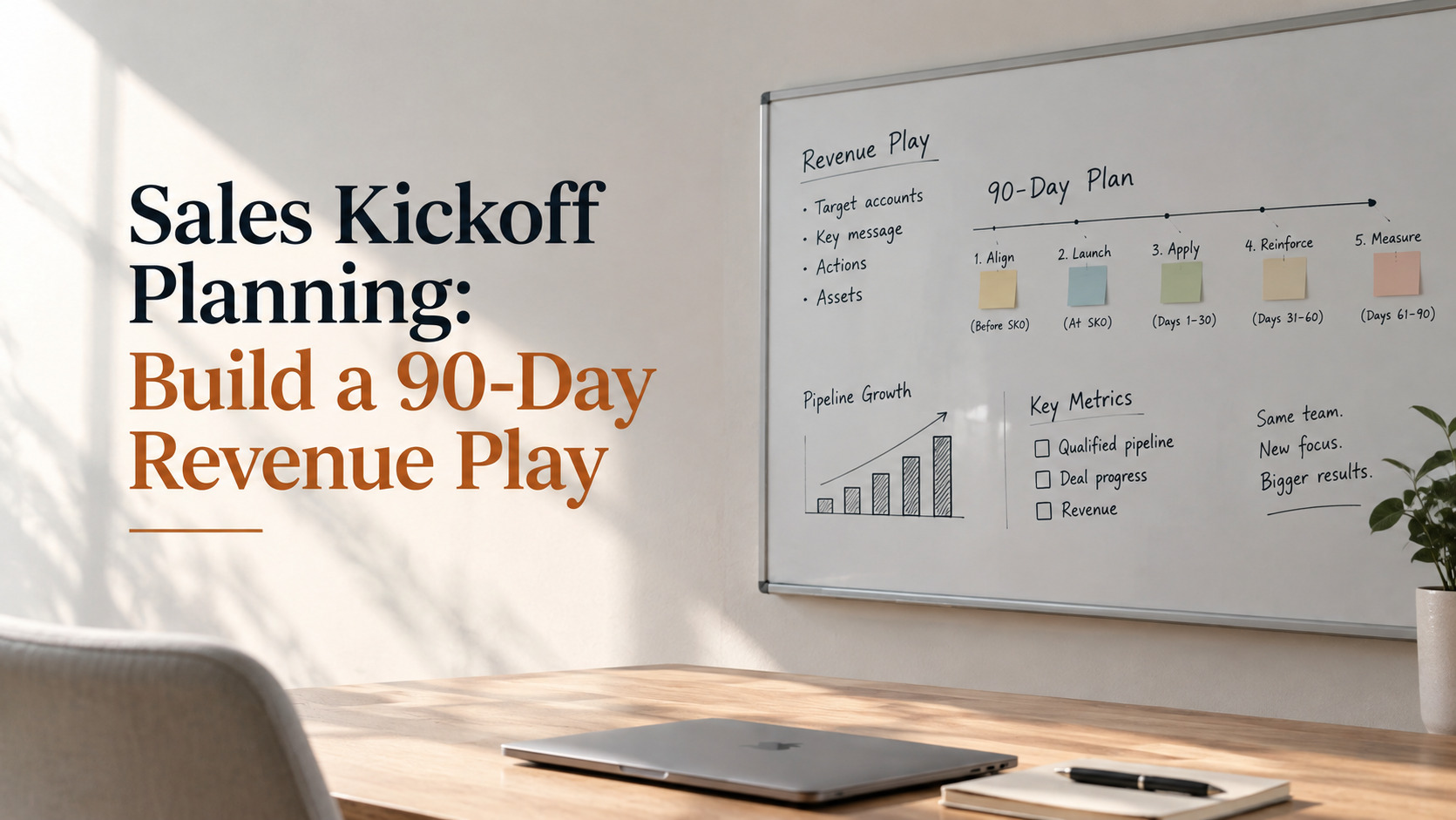
Here’s the shift: build your kickoff around one or two revenue plays. A revenue play takes your growth strategy and priorities and gives your sales team explicit direction, whether that’s expanding in strategic accounts, launching a new solution, or winning business in a specific segment. Four things make it work:
- Targeted: Be clear about the accounts, solutions, segments, and individuals you want to call on.
- Time-bound: Give the team a defined window. We typically find 90 days works well.
- Actionable: Sellers need to know where to focus and what to say, do, show, and share. Managers need to know how to coach.
- Measurable: Define what you’re tracking, including qualified pipeline and whether deals and opportunities are moving forward.
When these elements are in place, your kickoff has a purpose. It becomes the launch of a new play, not a couple of days of presentations that everybody feels good about.
What Can a Focused Revenue Play Achieve?
We worked with Wesco’s OEM business unit. They had already introduced a consultative sales process and new value-added services, but leadership wasn’t seeing the impact in strategic accounts.
So we helped them build a competitive advantage sales play. It gave sellers a specific approach: who to call on, what good looks like, what the message is, what actions to take, and what assets to share. Leaders knew what to coach and what to measure.
In the first 12 months, they saw more than $30 million in pipeline growth and more than $8 million in incremental new business in strategic accounts.
In another engagement, Broadview Networks saw average deal size increase 45% and close ratios double within 12 months.
Those aren’t always the typical results our clients see, and they aren’t guarantees. But they’re useful examples of what can happen when you equip the team with a focused play and keep managers and leadership engaged in executing it and coaching it.
How do you plan an effective sales kickoff?
Start with the play, then build the agenda around it. Align before the event: settle priorities and messaging, and prepare managers to coach. Build the case for action before you present the solution. Then make room on the agenda for practice and application to real opportunities, not just presentations.
What should happen in the 90 days after a sales kickoff?
The event lasts two days. The rollout lasts 90. Kodiak’s toolkit maps the rollout in five stages: align before the kickoff, launch at the event, apply in days 1–30 with seller practice and live-opportunity coaching, reinforce in days 31–60 with deal coaching and adoption reviews, and measure in days 61–90 by reviewing pipeline progress and what to improve next.
How can sales managers reinforce SKO messaging?
Managers need to know what good looks like and how to reinforce it. Give them a weekly coaching rhythm. Then move coaching beyond “how much, and when will it close?” to the play itself: what did the seller say, do, show, and share, and are deals moving forward?
How do you measure sales kickoff ROI?
Track whether sellers are applying for the play and whether qualified pipeline and opportunities are progressing. Kodiak’s adoption and execution tracker follows field behaviors alongside pipeline progress.
How do you know if your SKO is ready?
Start with the SKO Readiness Scorecard, the first of Kodiak’s nine toolkit resources. You answer three context questions, then rate 18 statements from 0 to 3. Your answers tailor the timing advice, kickoff agenda, and measures in your plan, which includes your priority gaps and a 90-day rollout. It’s free, needs no email, and doesn’t send or store your answers. Share the results with your leadership team and pick the gaps that matter most.
The other eight resources in the SKO toolkit include a revenue play template, an executive conversation framework, a manager coaching cadence, and a 30/60/90-day reinforcement plan.
As you plan, keep asking: what will our team be doing differently in the next 90 days, and how will we know it’s working?
FAQs:
How many revenue plays should a sales kickoff focus on?
One or two. A revenue play turns a growth priority, such as expanding in strategic accounts, launching a solution, or winning a segment, into explicit direction for the team. Too many priorities bring back the presentation-and-hope problem.
How long should a revenue play run?
We typically find 90 days works well. It gives the team a defined window, so they know when to execute.
Can we start if our kickoff agenda is already set?
Yes. Much of the toolkit focuses on the 90 days after the kickoff, when adoption and execution are won or lost.
Do we need to replace our sales methodology?
No. The question is whether sellers consistently use it in real customer conversations. The Readiness Scorecard can help you find the gaps.
What is the SKO Readiness Scorecard, and what does it cost?
It’s free and needs no email. You rate 18 statements and get your priority gaps and a 90-day rollout plan. The scorecard page says it doesn’t send or store your answers.
Will Kodiak call me after I download the toolkit?
No. You get the toolkit and a few follow-up ideas. If you want to talk through your kickoff, you can choose to schedule a conversation.