The sales world is full of buzzwords. Among them are “reactive selling” and “proactive selling.”
In helping companies revamp their sales processes, we find that proactive selling the method of generating and qualifying opportunities to develop a healthy funnel often separates the best sales professionals from the merely good ones.
While reactive sellers spend their time responding to opportunities as they arise, proactive sellers create opportunities. They consistently identify qualified prospects, build relationships, and develop a healthy pipeline rather than relying on opportunities to come to them. That proactive mindset starts with having a plan.
Proactive Selling Starts with a Plan
One of the most critical aspects of proactive selling is creating an effective territory plan: a document that analyzes the opportunities in a specific region, vertical, or market and creates a prioritized list of targets and strategies to help you exceed your quota.
A territory plan is more than a list of accounts. It provides direction for where to focus your time, which opportunities deserve the greatest attention, and how to approach your market strategically. Instead of chasing every lead, sales professionals can prioritize the prospects most likely to generate results.
In other words, a solid, well-developed territory plan might be the difference between hitting or missing your number this year.
Why Territory Planning Matters
Without a territory plan, it’s easy to spend valuable time pursuing low-priority opportunities while overlooking high-value accounts.
A strong territory plan also creates consistency. Rather than deciding each day where to spend your time, you already have a roadmap for prospecting, account management, and pipeline development. This allows you to stay focused on long-term objectives while maintaining a steady flow of qualified opportunities.
Territory planning also benefits sales managers by providing greater visibility into account coverage and sales activity. When everyone follows a structured plan, managers can more effectively coach their teams, identify gaps in coverage, and ensure resources are being directed toward the most promising opportunities.
Perhaps most importantly, a territory plan should evolve over time. Markets change, customer priorities shift, and new opportunities emerge. Reviewing and refining your plan regularly helps ensure it remains aligned with your sales objectives throughout the year.
Common Territory Planning Mistakes
Although territory planning is essential, it’s often misunderstood or poorly executed. One common mistake is trying to pursue every available opportunity instead of prioritizing accounts with the highest potential. Without clear priorities, sales professionals can quickly spread themselves too thin.
Another challenge is relying on outdated information. Markets, organizations, and decision-makers change, making it important to review account lists and adjust strategies as new information becomes available.
Some sales professionals also treat territory planning as a one-time exercise completed at the beginning of the year. In reality, effective territory planning is an ongoing process. Regularly evaluating progress, identifying new opportunities, and refining priorities helps maintain momentum and keeps your pipeline healthy.
What Every Territory Plan Should Include
While every organization approaches territory planning differently, the most effective plans share several common characteristics. They identify high-value target accounts, prioritize opportunities based on business potential, establish clear outreach strategies, and define measurable objectives.
An effective territory plan should also encourage sales professionals to think strategically about account penetration, competitive positioning, and relationship development. Instead of simply reacting to immediate opportunities, the plan provides a framework for building a stronger pipeline over time.
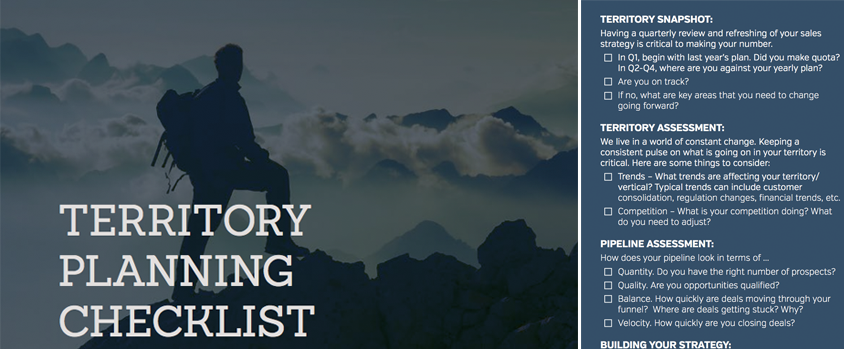
Download the Territory Planning Checklist
That’s why we created this free Territory Planning Checklist, part of a process that’s helped companies such as ARRIS, Broadview Networks, Henry Schein, HP, McKesson, and Motorola achieve and even surpass their sales goals.
Have you developed your plan for the months ahead? Download our Territory Planning Checklist and avoid the primary sales-goals-stifling mistakes companies make regarding territory planning.