A Kodiak Group client sold into surgery centers. Their product was strong, their discovery conversations were thorough, and their sales team consistently engaged multiple stakeholders. By every internal measure, they were doing the right things.
Then came the presentation stage, and the deal quietly went to the incumbent. Again.
This wasn’t an isolated loss. It was a pattern. The team invested weeks uncovering customer challenges and building relationships, only to hear, “Let’s revisit this next year,” when it came time to make a decision.
The competitor wasn’t winning. The status quo was.
Customers understood the solution, but they didn’t have a compelling business reason to switch. Without a clear case for change, staying with their current provider felt like the safer choice.
Where the Deal Was Actually Getting Lost
When we looked closer, the issue wasn’t the product, the pitch, or the reps. It was what happened between discovery and the demo, the gap where a prospect navigates a complex decision process, multiple stakeholders all needing an answer for why they should consider a change, and why now. The gap is where a prospect either builds internal conviction to change or quietly decides staying put is safer.
Without a compelling reason to act now, no decision will always feel like the safer choice, no matter how good the discovery conversation was.
The sales team had a discovery process. What they didn’t have was a mechanism for turning that discovery into urgency.
Building the Business Case Into the Process
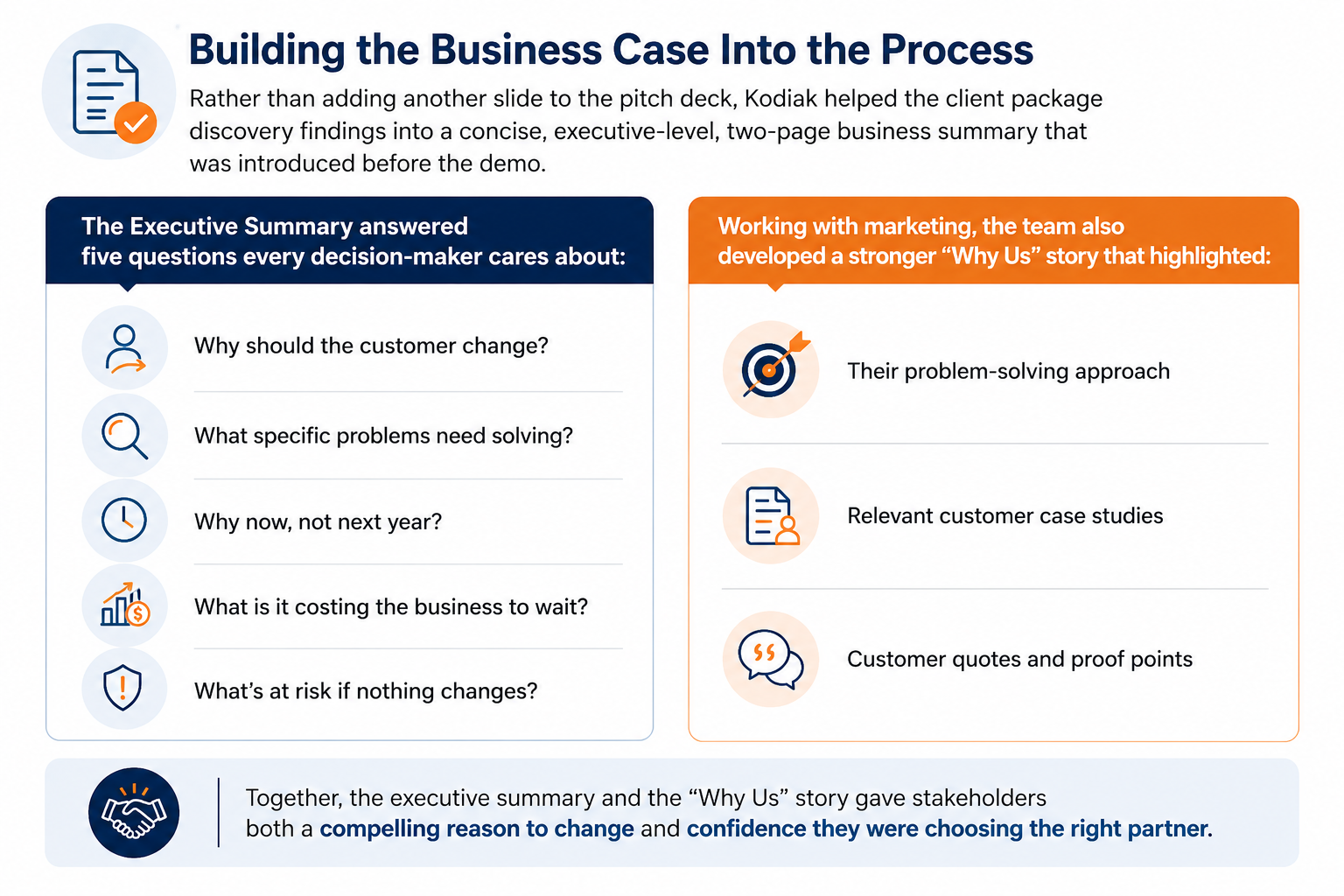
Rather than adding another slide to the pitch deck, Kodiak helped the client package discovery findings into a concise, executive-level two-page business summary that was introduced before the demo.
That summary answered five questions a decision-maker actually cares about:
- Why should the customer change?
- What specific problems need solving?
- Why now, not next year?
- What is it costing the business to wait?
- What’s at risk if nothing changes?
Working with marketing, the team also developed a stronger story that highlighted:
- Their problem-solving approach
- Relevant customer case studies
- Customer quotes and proof points
Together, the executive summary and “Why Us” story gave stakeholders both a compelling reason to change and confidence they were choosing the right partner.
Why Timing Made the Difference
The detail that made this work wasn’t just the content. It was the timing.
Rather than introducing the executive summary during the demo, Kodiak helped the client bring it into the sales process before the demo, while stakeholders were still evaluating their options and building internal alignment.
That gave decision-makers a clear business case before they were asked to evaluate the solution itself. Rather than delivering a demo showing all features and capabilities, the team used the demo to demonstrate how it solves their problems and will deliver the business impacts outlined in the business case. The demo equipped stakeholders with a compelling rationale for change by clearly communicating:
- Why they are uniquely positioned to solve their business challenges
- Why the business needed to act now
- The cost of maintaining the status quo
- The measurable business impact of making a change
What Changed
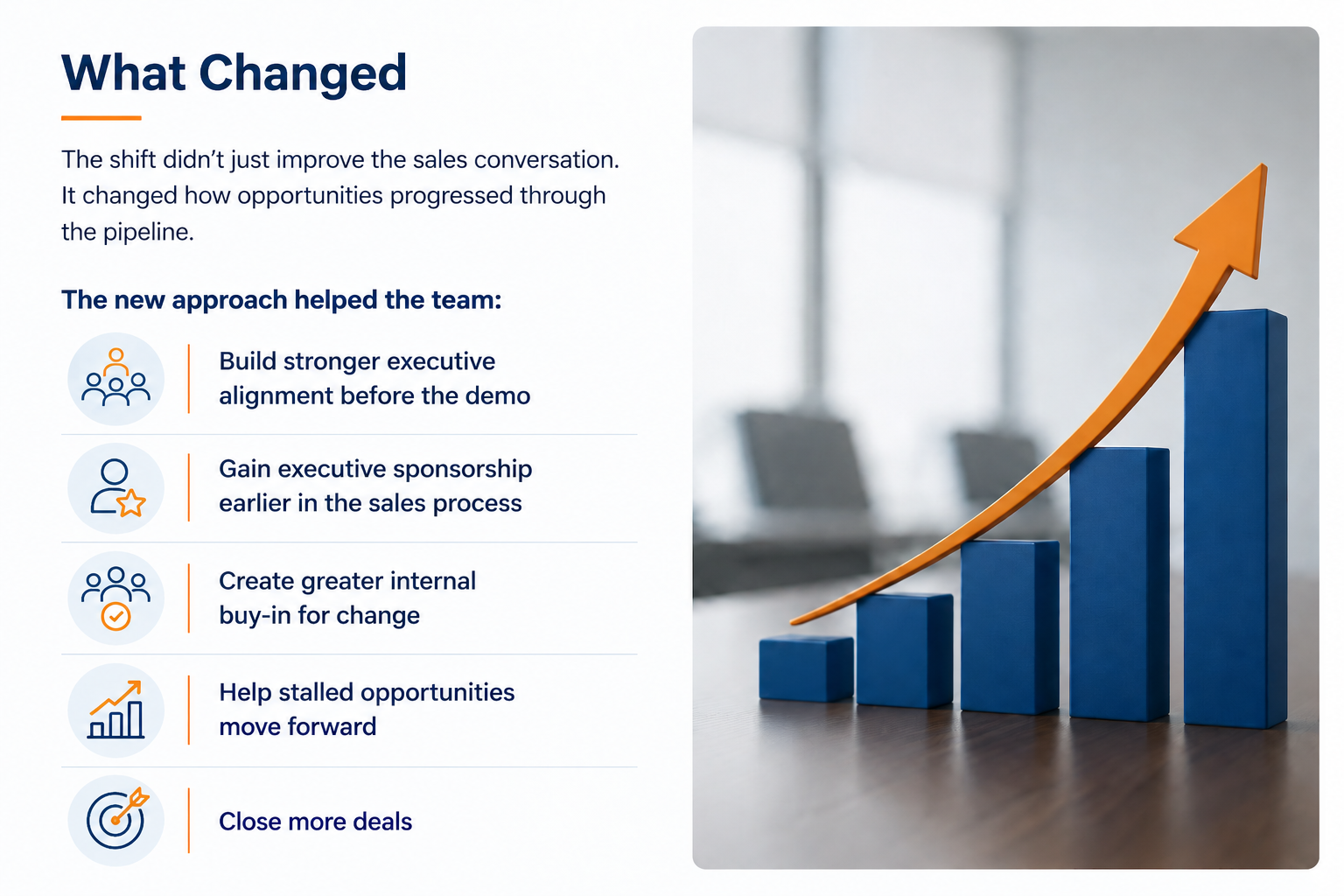
The shift didn’t just improve the sales conversation. It changed how opportunities progressed through the pipeline. The new approach helped the team:
- Build stronger executive alignment before the demo
- Gain executive sponsorship earlier in the sales process
- Create greater internal buy-in for change
- Help stalled opportunities move forward
- Close more deals
The Missing Link Between Discovery and Decisions
Deals don’t always stall because of pricing or product fit. Often, they stall because buyers haven’t built a compelling internal case for change before it’s time to make a decision. A strong demo can still lose to the status quo if stakeholders aren’t equipped with a clear business rationale for moving forward.
By giving stakeholders a clear reason to change, a sense of urgency, and confidence in the solution, sales teams can create stronger alignment before critical decisions are made.
Kodiak Group helps B2B revenue teams identify where opportunities lose momentum and redesign the sales process to address those gaps. If your team consistently hears not right now, it may be time to look beyond the pitch and examine what happens before the demo.