Every revenue leader is being pitched an AI tool right now.
Faster prospecting. Better messaging. Smarter forecasting. The promise is everywhere.
But here is the problem most teams are running into: AI does not fix a broken sales process. It does not fix unclear messaging. It does not fix a sales playbook that nobody opens.
Most RevOps teams are evaluating their options or have already made a bet. MIT’s 2025 State of AI in Business report found that organizations are still working to translate generative AI investments into measurable business outcomes. The lesson for sales teams is straightforward: AI amplifies the effectiveness of the process you already have.
If the workflow is already broken, AI may simply help the team do more of the wrong things faster.
The opportunity is to use AI differently. AI becomes genuinely powerful when it is connected to a clear sales operating system : strong plays, consistent messaging, manager coaching, and real execution discipline. That is what the best B2B teams are doing in 2026. Not replacing sales judgment with AI. Using AI to make their playbooks more practical, more accessible, and more useful in the daily work of sellers and managers.
The question for 2026 is not whether your team has a playbook. It is whether your team is using it. AI can help close that gap. But only when the foundation is right.
1. Stop Guessing What Good Looks Like. Use AI to Find It.
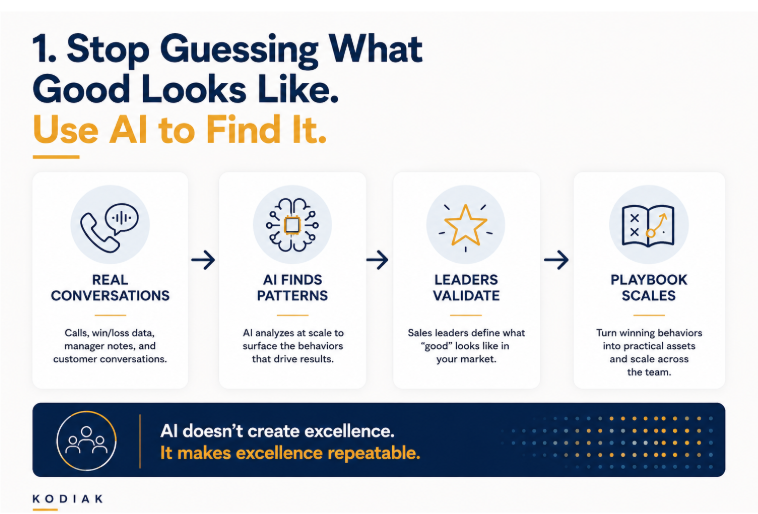
The foundation of a good sales playbook has not changed. It is still about capturing what the best people on your team do repeatedly and making that repeatable across the rest of the team.
What AI changes is the speed at which you can do that.
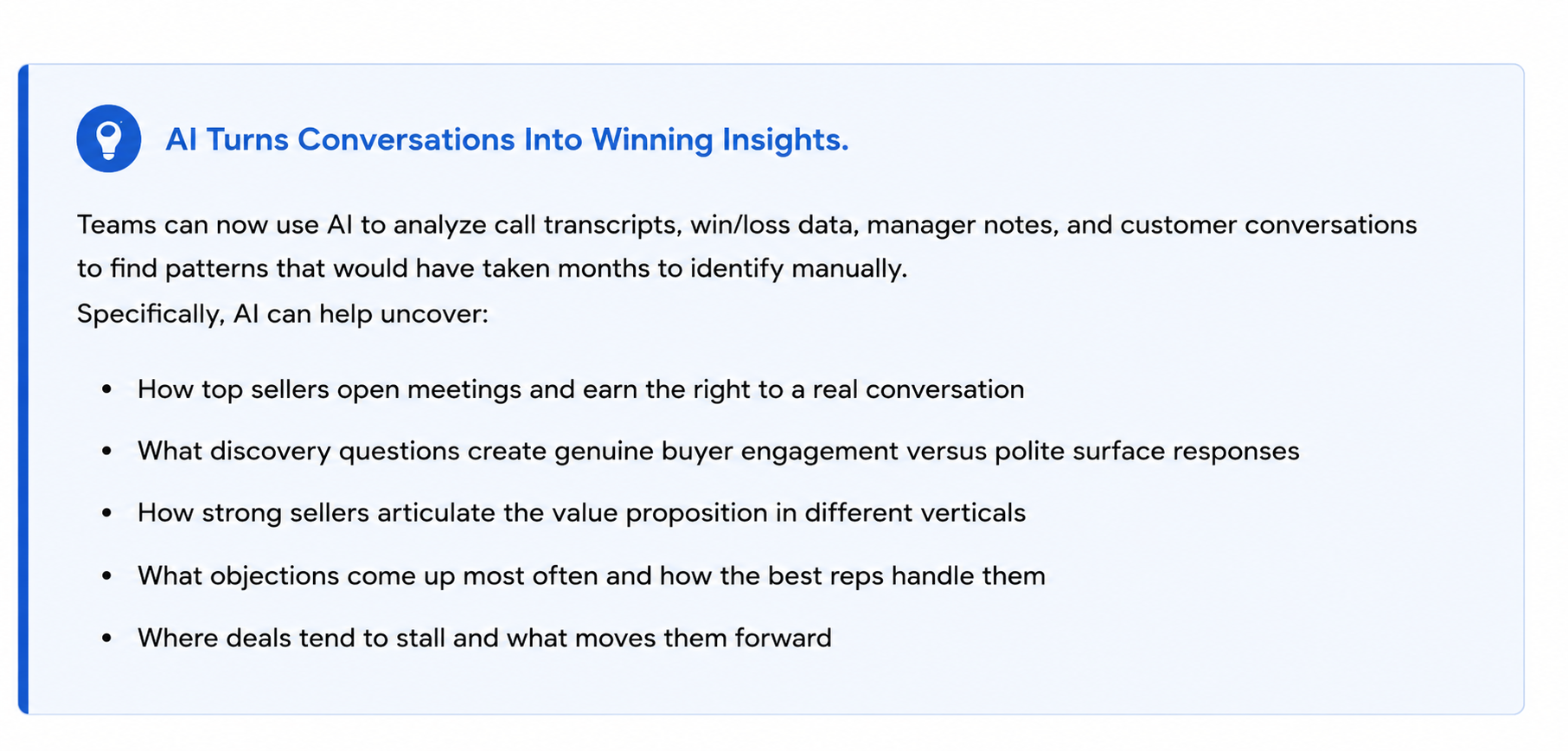
Teams can now use AI to analyze call transcripts, win/loss data, manager notes, and customer conversations to find patterns that would have taken months to identify manually. Specifically, AI can help uncover:
- How top sellers open meetings and earn the right to a real conversation
- What discovery questions create genuine buyer engagement versus polite surface responses
- How strong sellers articulate the value proposition in different verticals
- What objections come up most often and how the best reps handle them
- Where deals tend to stall and what moves them forward
This process should still be human-led. AI can organize and surface the patterns. But sales leaders and managers still need to validate what good actually looks like and determine if the best practices identified are relevant for the team, the solutions, the vertical, etc.
Once those best practices are identified, AI can help turn them into practical playbook assets, talk tracks, discovery guides, objection-handling examples, competitive positioning, and manager coaching prompts. The key point is that AI should not generate a generic playbook from scratch. It should help capture and scale the behaviors and messaging that already work inside your specific organization.
High-performing sales teams are often distinguished not by the technology they use, but by how effectively they capture, reinforce, and scale the behaviors of their top performers.
AI can accelerate that process.
2. Your Best Prospect Should Not Be Where Sellers Practice the New Message.
This is one of the most underused applications in B2B sales training today.
Sales teams introduce new messaging, new plays, and new processes and then expect sellers to deliver them confidently in live customer conversations. That is a significant task. Sellers need practice before they are in front of an important prospect or a strategic account.
Your best prospect should not be the first place a seller practices the new message.
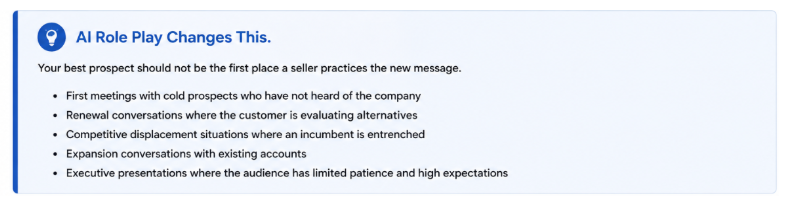
The value is that reps can build confidence, test language, and find their voice before the real call. The playbook shifts from a document reps read once to a tool they use to prepare for real conversations.
That shift from documentation to preparation tool is what makes playbooks actually change how sellers sell.
Our SalesOptyx enablement platform supports exactly this kind of active, practice-based learning. It delivers play-based content and coaching in a video-enabled format that reps can use to prepare for specific call types, not just review during onboarding. The platform is built around the selling situation, not the product catalog. That distinction matters.
3. A Playbook That Does Not Learn from the Field Is Already Outdated.
Traditional playbooks become stale fast.
Buyer questions change. Competitors shift their positioning. New objections emerge. Sellers learn what works in the field, but that knowledge rarely makes it back into the official playbook in any systematic way. The playbook says one thing. The best sellers are doing something else. Average sellers continue to rely on outdated guidance.
AI can help close that loop.
Teams can use call transcripts, CRM activity, win/loss patterns, and manager coaching notes to continuously identify what is changing and where the playbook needs to be updated. Specifically, AI can surface:
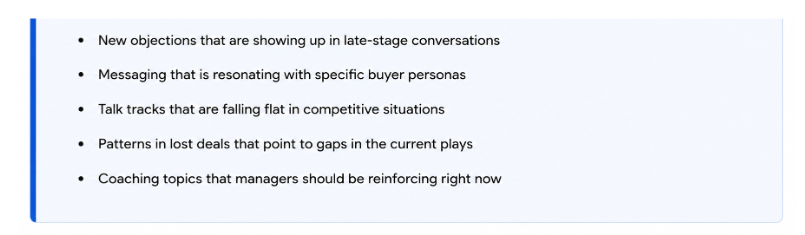
Research from Highspot suggests that the most effective sales playbooks are not static documents. They evolve as buyer behavior shifts, new competitors emerge, and go-to-market motions change, helping sales teams stay aligned with what is working in the field.
This is where an online sales enablement platform becomes essential. Sellers need to access the current version of the playbook at the point of need before a call, during account planning, when preparing for a competitive situation. Managers need to reference the same plays in 1:1 reviews and team coaching sessions.
The Goal Is Not More Tools. The Goal Is Better Execution
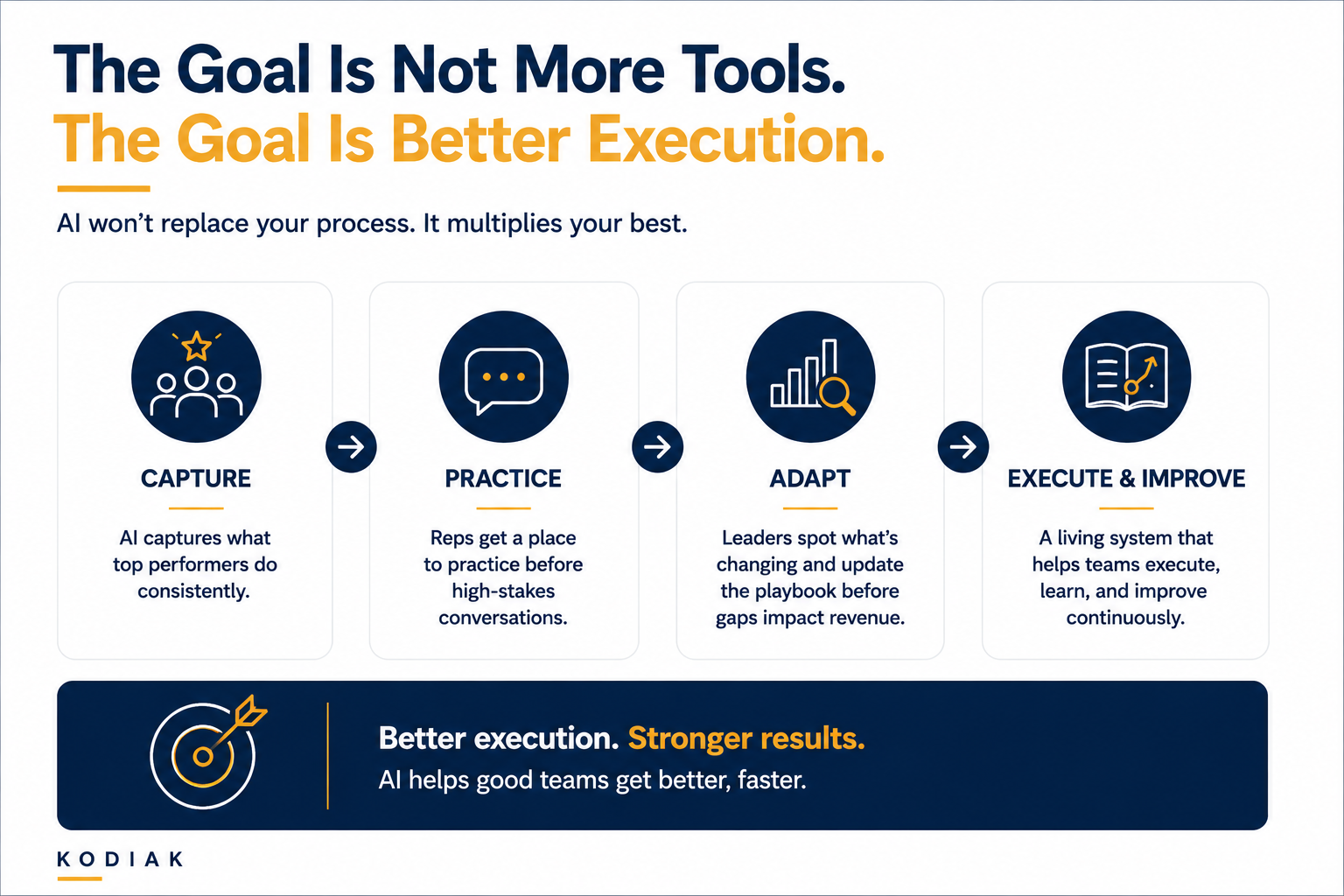
AI will not replace the need for a clear sales process, strong messaging, manager coaching, or disciplined execution.
When teams connect AI to the right sales operating system, they improve faster.
AI can capture what top performers do and make those behaviors accessible to every seller on the team. Reps gain a place to practice before high-stakes conversations. Leaders can identify market changes and update the playbook before gaps become revenue problems.
That is what the modern sales playbook looks like in 2026. Not a static document. A living system that helps the sales team prepare, practice, execute, and improve.
The goal is not more tools. The goal is better execution. AI just makes it easier to get there when the foundation is right.
Kodiak Group builds the sales operating systems that make Revenue Plays, manager coaching, and sales enablement work together. If your playbook is sitting in a shared drive instead of running in the field, let’s talk.