

We’ve worked with a lot of distribution companies over the years. And one thing that stands out every time: the gap between a top performer and a new rep isn’t just experience, it’s that nobody’s ever written down what the top performer actually does.
The best reps have been calling on the same customers for decades. They’re valuable, well-compensated, and not going anywhere. But ask them to explain why they win, and you’ll usually get something like: “I just know my customers.”
They believe that’s the answer because the behaviors that built their success became automatic a long time ago, so they don’t think about them anymore. They just do them.
The best distribution teams don’t leave account knowledge trapped with individual reps. They capture the behaviors, customer preferences, relationship history, objections, and decision-making patterns that top reps use every day and turn them into shared resources the rest of the team can actually use.
That’s not a distribution sales playbook . That’s tribal knowledge, and when the next generation of reps tries to figure it out on their own, they default to price and availability. And that’s a race nobody wins.
Here are three things the best distribution reps do that are worth capturing before that knowledge walks out the door
1. They Know Their Real Differentiator and It Isn’t the Product
Here’s a fact most distributors don’t like saying out loud: your product line looks a lot like your competitor’s. Same manufacturers, in a lot of cases. Similar lead times. Pricing that’s close enough that a customer could build a spreadsheet and barely tell the difference.
So what separates a top rep from someone who just takes orders?
The best reps have a crystal-clear answer to the question: Why should a customer buy from us?
It’s not the catalog. It’s the combination of expertise, responsiveness, problem-solving, and trust they’ve built over time and they can articulate it. New reps rarely can.
Getting your team aligned on a clear, specific value story isn’t marketing fluff. It’s the foundation of every conversation your reps are going to have.
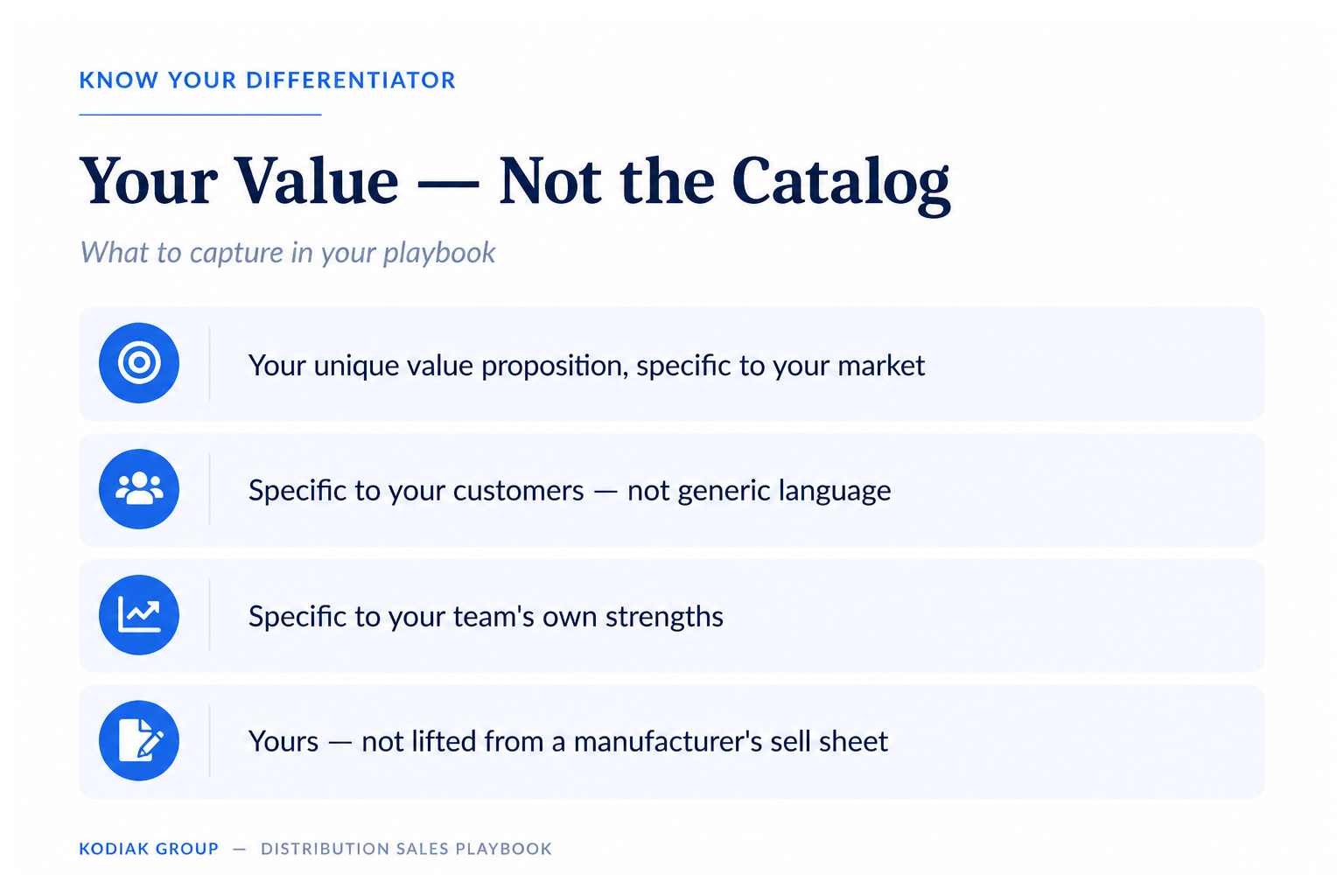
What to capture in your playbook:
Your unique value proposition specific to your market, your customers, and your team’s strengths. Not generic. Not lifted from a manufacturer’s sell sheet. Yours.
2. They Get Closer to the End User
Most distribution channels have a layer sitting between the rep and the person who owns the problem: a contractor, a project manager, an engineer, a facilities director. And a lot of reps never get past that layer.
- Top performers do something different.
- They invest in understanding the end user’s world: their priorities.
- The project
- The budget pressures
- The timeline
- The spec. That understanding lets them do something most reps never get to do: bring insight.
When you understand the problem before the customer even asks, you stop reacting to RFPs/BOMs and start helping customers spec projects. You stop competing on price because you’ve already created value before the sale starts.
The reps who get closest to the end user don’t just win more deals, they win better deals, at higher margins, and build stronger customer relationships. Top performers do this because they know that when you understand the customer’s problem before they can articulate it, you’ve already distinguished yourself from every other quote in the stack.
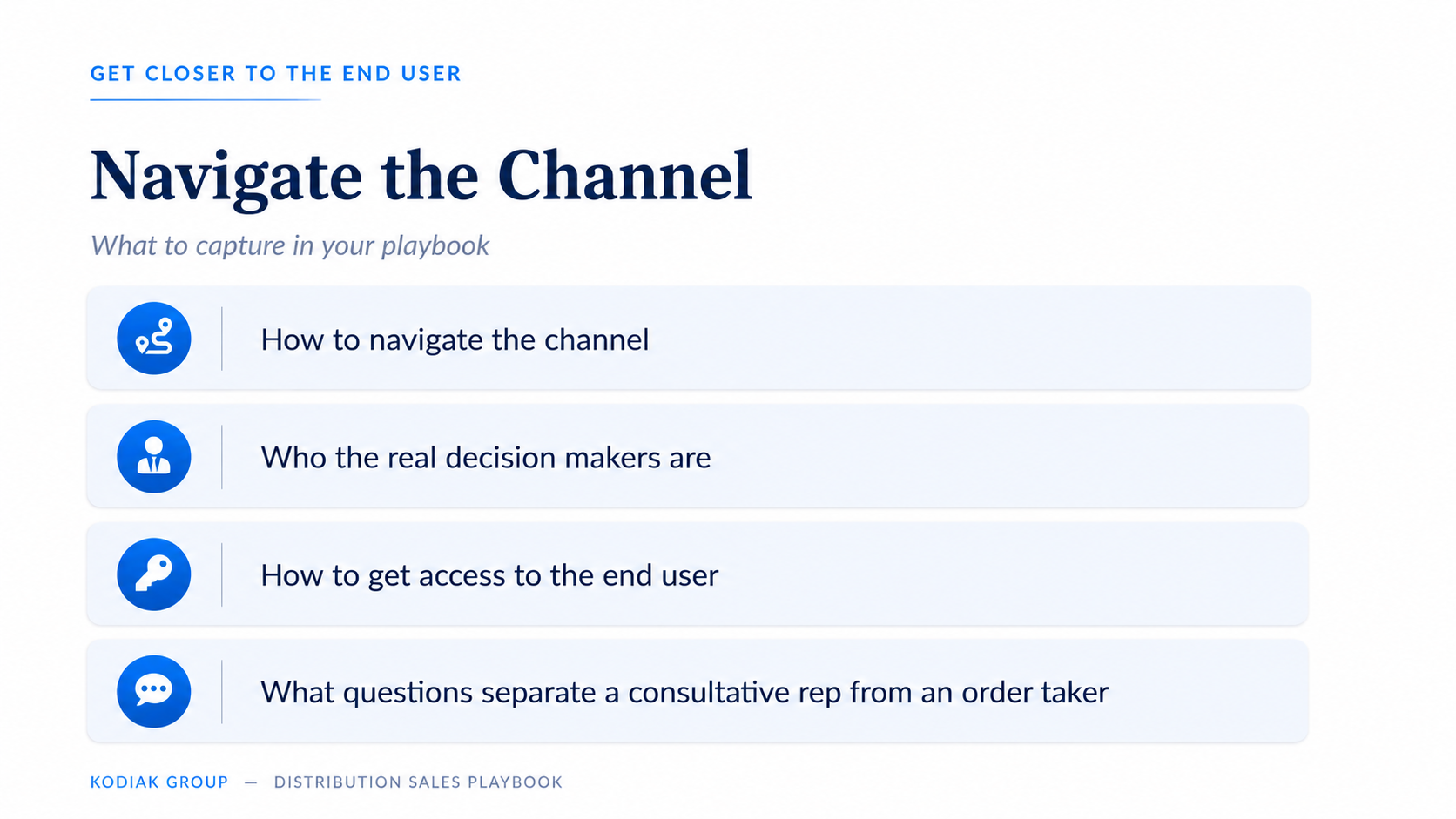
What to capture in your playbook:
How to navigate the channel, who the real decision makers are, how to get access to the end user, and what kinds of insights and questions differentiate a consultative rep from an order taker.
3. They Build a Strategy Around Supplier Partnerships
New reps show up with donuts. Top reps show up with a plan.
The best distribution salespeople we’ve worked with treat their strategic suppliers as a growth lever, not simply a source of product. Joint calls. Co-selling. Account planning done together, not something dreamed up on the drive over. They know exactly which suppliers are aligned with their most important accounts, and they build their go-to-market approach around those relationships on purpose.
That’s how they grow accounts that feel impossible to break into. It’s not luck. It’s a strategy.
Most new reps in a territory think the job is volume: get in front of as many accounts as possible and see what sticks. The top performers know it’s the opposite. It’s about going deep on the accounts that matter and using every resource available, especially supplier partnerships, to get there faster.
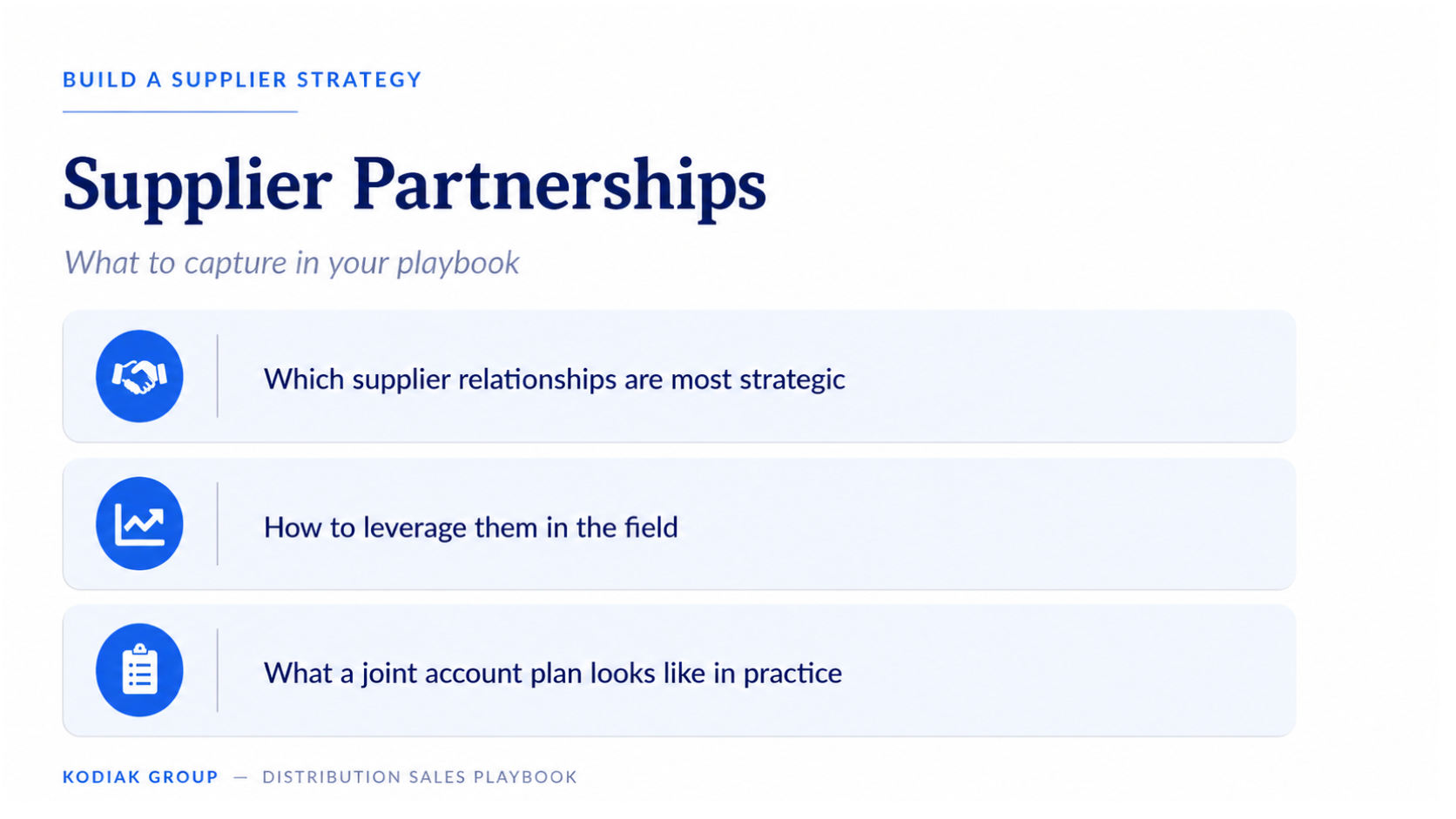
What to capture in your playbook:
Which supplier relationships are most strategic, how to leverage them in the field, and what a joint account plan looks like in practice.
Three Questions Worth Asking Your Team
Your best reps are a competitive advantage today. But that advantage has an expiration date if it never leaves their head. Every year that knowledge stays undocumented is a year your newer reps spend rediscovering it the slow way or never discovering it at all.
If you’re working with a distribution sales team and you haven’t answered these three questions yet, that’s the starting point:
- What’s your unique value and can every rep articulate it?
- Are your reps getting close enough to the end user?
- Do you have a real supplier partnership strategy, or are you leaving those opportunities on the table?
We’d love to hear what you’re seeing in the field. Drop a comment or reach out directly.
At Kodiak Group, this is the work we do with distributors sitting down with top performers, pulling out what’s actually in their heads, and building it into a best practices sales playbook, coaching framework, and sales management approach the rest of the team can use. If this sounds like where your organization is right now, we’d welcome the conversation.



One comment